Blogs
How to Increase Ecommerce Conversion: What Enterprise Brands Do Differently



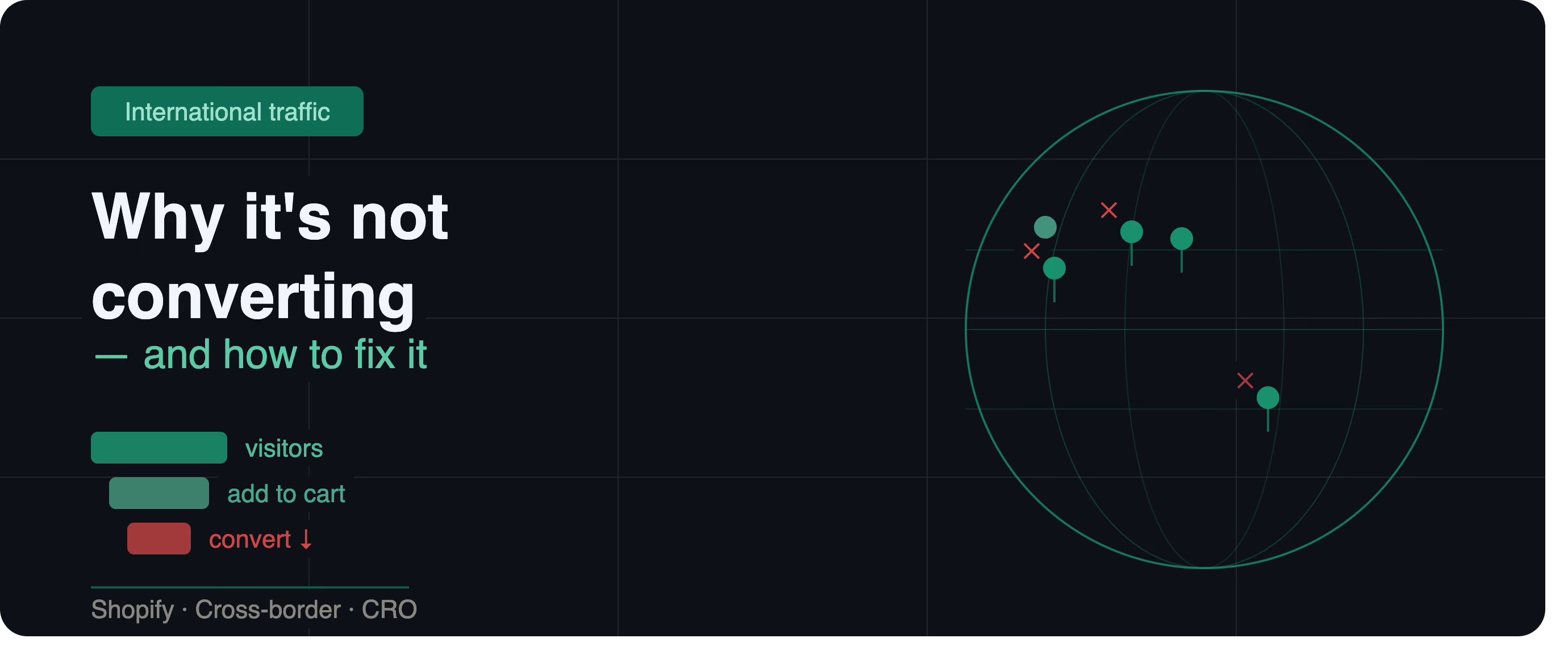

If more than a quarter of your site traffic is coming from outside the US, you already have an international customer base. The question is why they are not buying.
The gap between international traffic share and international revenue share is significant across almost every brand in this segment. It is almost always caused by the same set of problems; problems that sit at the checkout, not in the product or the brand.
If this hits home, you’re not alone in this.
Thousands of DTC brands are in the same position, strong international traffic with conversion rates that do not reflect it. Many are sitting on 50,000 or more international visitors every month without the checkout infrastructure to capture them.
Now that is real, measurable demand sitting on the table. The gap almost always comes down to the same five problems at checkout.
Here is what they are and how to fix them.
Five specific barriers sit between an international visitor and a completed order. Most brands are unaware of all five.
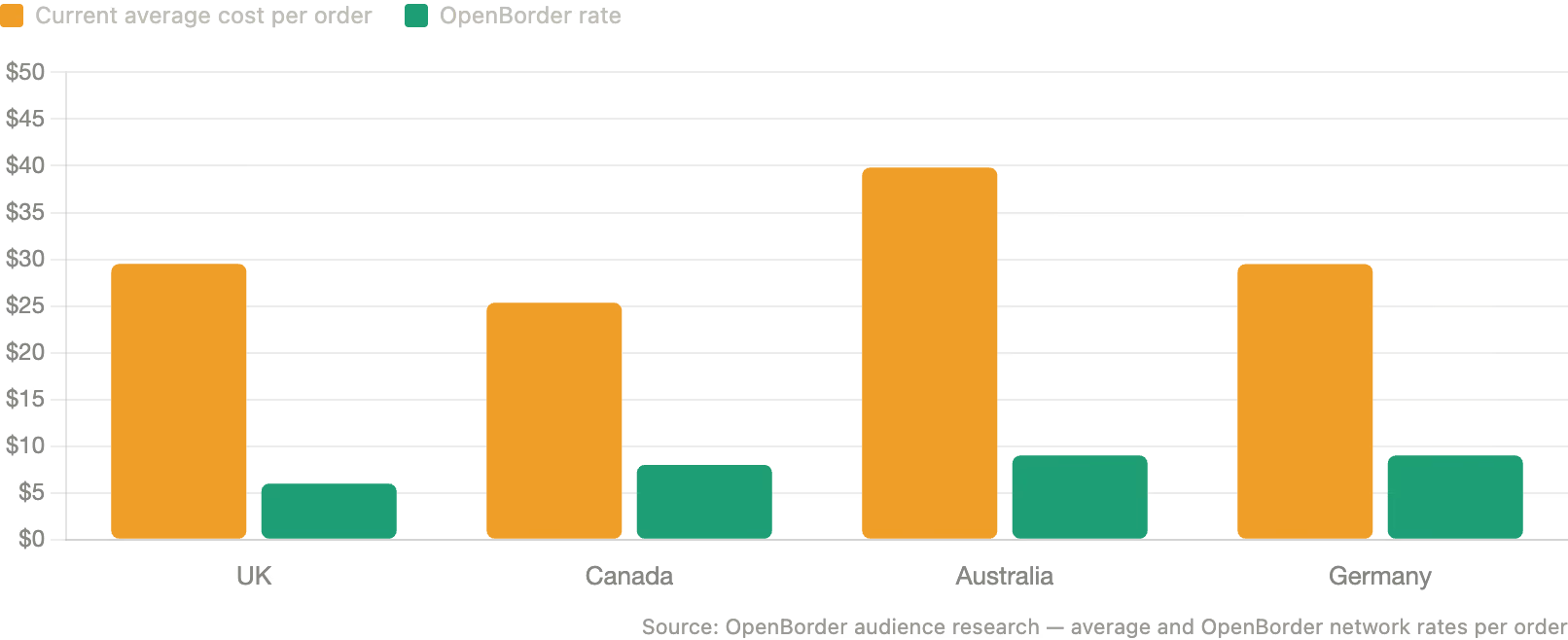
The average cost US brands charge to ship to their four main international markets (UK, Canada, Australia, and Europe) ranges from $25 to $40 per order. On a $60 skincare purchase, a $40 shipping fee stops most international buyers before they even reach the proceed-to-pay stage.
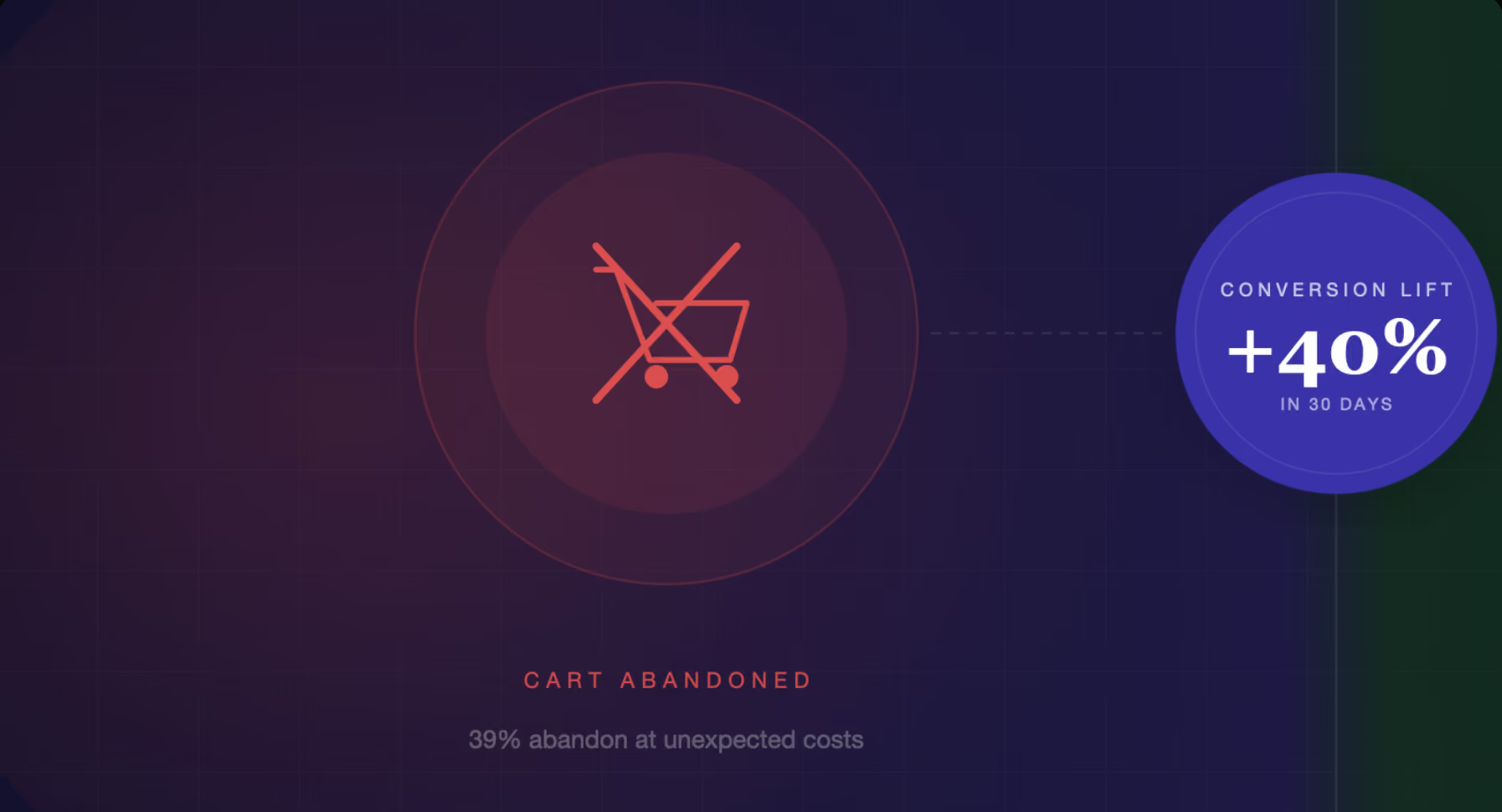
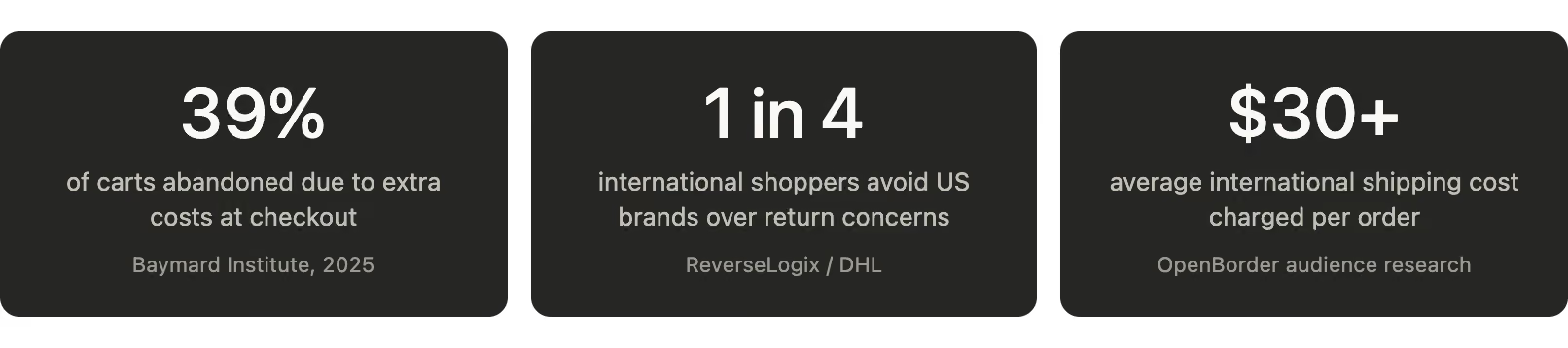
According to Baymard Institute, 39% of shoppers have abandoned a cart specifically because extra costs at checkout were too high. International customers hit this at higher rates because the fees are two to four times what domestic shoppers see.
Research by Shopify and The Paypers found that 92% of international shoppers prefer to complete purchases in their local currency, and 33% will abandon outright if shown pricing in USD only. Most Shopify stores without a dedicated cross-border setup default to USD across all markets.
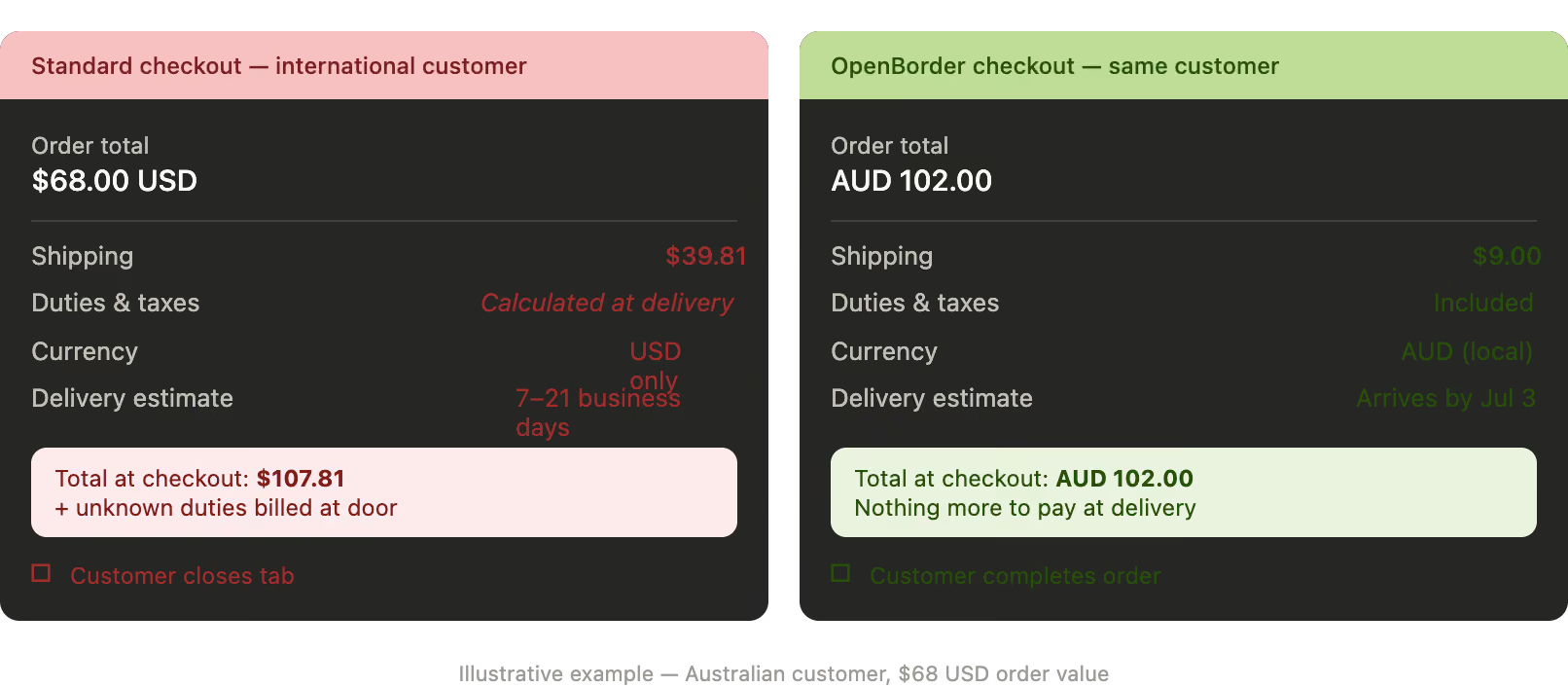
When a brand ships DDU (Delivered Duty Unpaid), the carrier delivers the package and bills the customer for any applicable duties and taxes on arrival. On a $120 order shipped to Canada, that surprise can add $15 to $25 at the door; an amount the customer did not budget for and did not agree to at checkout. Many refuse the package entirely. The brand absorbs the refund, the sunk shipping cost, and a customer who is unlikely to order again.
Most US DTC brands ship DDU by default. It is not a deliberate choice. It is what Shopify does out of the box when no cross-border infrastructure is in place.

International shipping at retail carrier rates typically comes with vague windows: "7 to 21 business days." For a buyer in Melbourne considering a $150 purchase, that is a sure shot reason to hesitate, close the tab, and reconsider. A specific delivery date creates commitment. An estimated range creates doubt.
Research from ReverseLogix and DHL found that one in four shoppers actively avoids purchasing from international retailers because of return concerns. When returning means shipping a package from the UK or Australia back to a warehouse in the US at the customer's own cost, many buyers factor that exposure into whether they place the order at all. The return cost becomes a pre-purchase risk that some shoppers are not willing to take.
Most brands got here by default, not by choice.
Most DTC brands that ship internationally turned on shipping in Shopify, accepted the rate quoted by UPS or FedEx at retail pricing, and moved on. They never set up local currency display, never registered for VAT in key markets, never structured DDP at checkout, never built return infrastructure outside the US. The Shopify default stack was designed for domestic commerce. Every piece needed to serve international customers properly (local payment processing, duty calculation at checkout, carrier network pricing, market-specific compliance) sits outside it.
The data reflects this directly. 91% of the 3,269 brands in this segment have no dedicated cross-border platform in place. They are using Shopify Markets at best and retail carrier rates at worst, with manual workarounds for compliance in between. Most brands have not chosen this approach. It is simply what they inherited when they turned on international shipping without building the infrastructure around it.
One additional change compounds this in 2025. The US $800 de minimis exemption which had allowed many low-value imports to clear customs duty-free ended in August 2025 per US Customs and Border Protection.
International customers ordering from US brands now face duty exposure on orders that previously cleared without cost. Brands with DDP checkout already in place can show the full landed cost transparently and let the customer decide. Brands without it are passing surprise charges to customers with no context.
Getting this right means building out five pieces of infrastructure that work as a system. There are six components, and they need to work together rather than in isolation.
Through a carrier network with real volume contracts, US to UK drops to $6 per package. US to Canada drops to $8. US to Australia where the current average is $39.81 drops to $9. The service level stays the same. The difference is buying power through consolidated volume. For brands that already have carrier relationships or preferred logistics contracts, a BYOC (Bring Your Own Carrier) model means the platform works with your existing agreements rather than replacing them.
Duties and VAT are calculated upfront and collected at the point of purchase. The customer sees the full landed cost, agrees to it, and receives the package with nothing left to pay. No surprise bills. No refused packages. No customer service fallout from a checkout that was not honest about the total.
Every major market gets pricing in local currency at checkout. UK customers see GBP. Canadian customers see CAD. Australian customers see AUD. This directly addresses the 33% abandonment rate tied to USD-only checkout, and the 92% of international shoppers who prefer to buy in their own currency.
Cross-border transactions through standard Shopify Payments carry a 4 to 5% processing fee. Routing through a local entity drops this to 1.0–1.4% . At $10M in international GMV, that difference is $400,000 per year in fees recovered.
Return hubs in destination markets receive parcels domestically, then consolidate and ship back to the US in bulk. OpenBorder's internal data shows this reduces the average international return cost from $30.38 to $9.67 per package a 68% saving on every return processed.
Most cross-border platforms solve one piece. OpenBorder covers the full stack through a single Shopify integration.
Every result below comes from brands that completed the full infrastructure build and measured what changed.
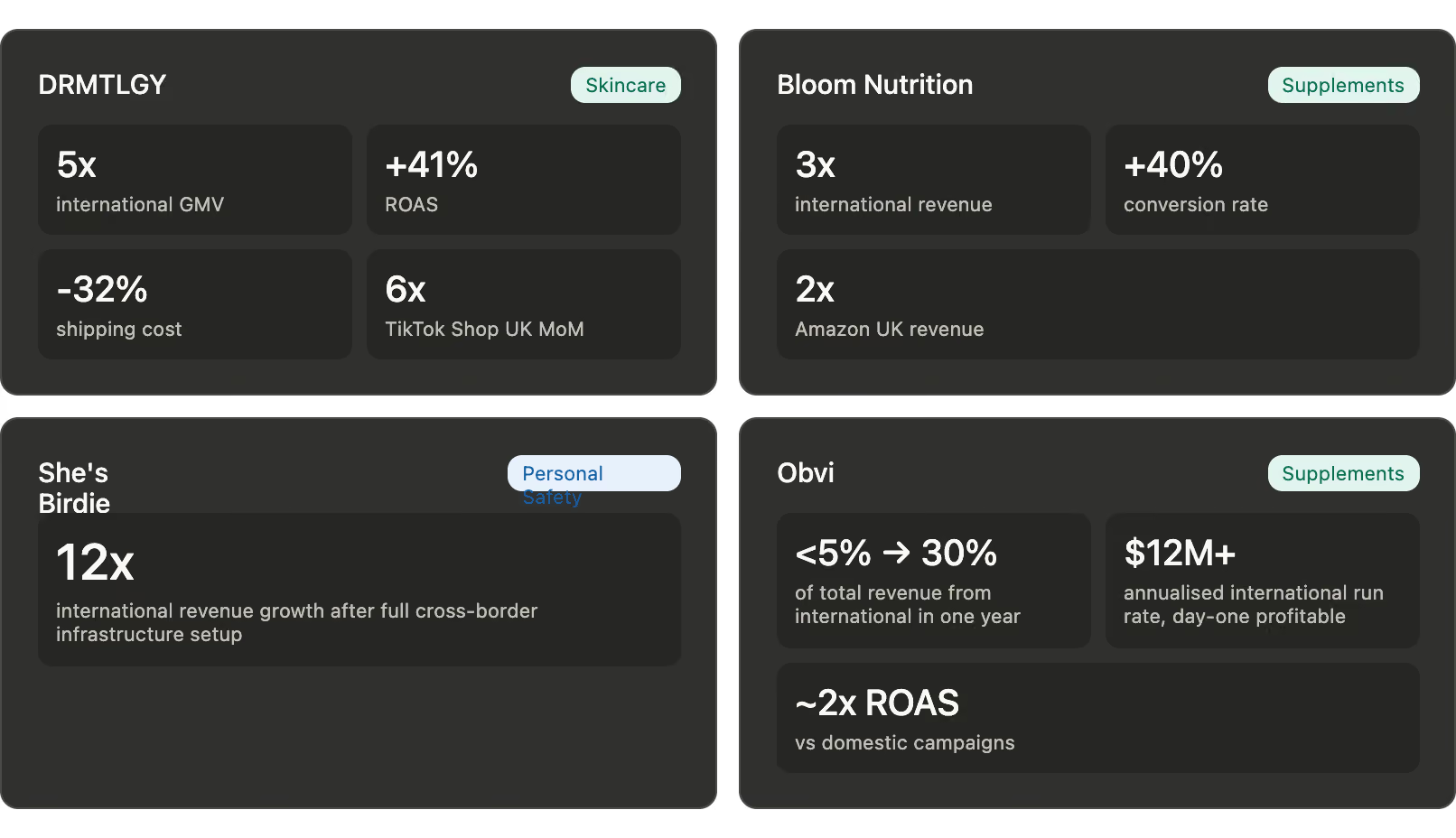
The common thread across all four: they moved from partial or no cross-border infrastructure to a complete stack. The gap between international traffic and international revenue closed when the checkout stopped creating the barriers described above.
If you’re seeing strong international traffic but the revenue does not match it, the gap is almost always in the checkout. A 15-minute call is usually enough to identify exactly where; by market, by cost component, and by what the revenue should look like.