Blogs
How to Increase Ecommerce Conversion: What Enterprise Brands Do Differently



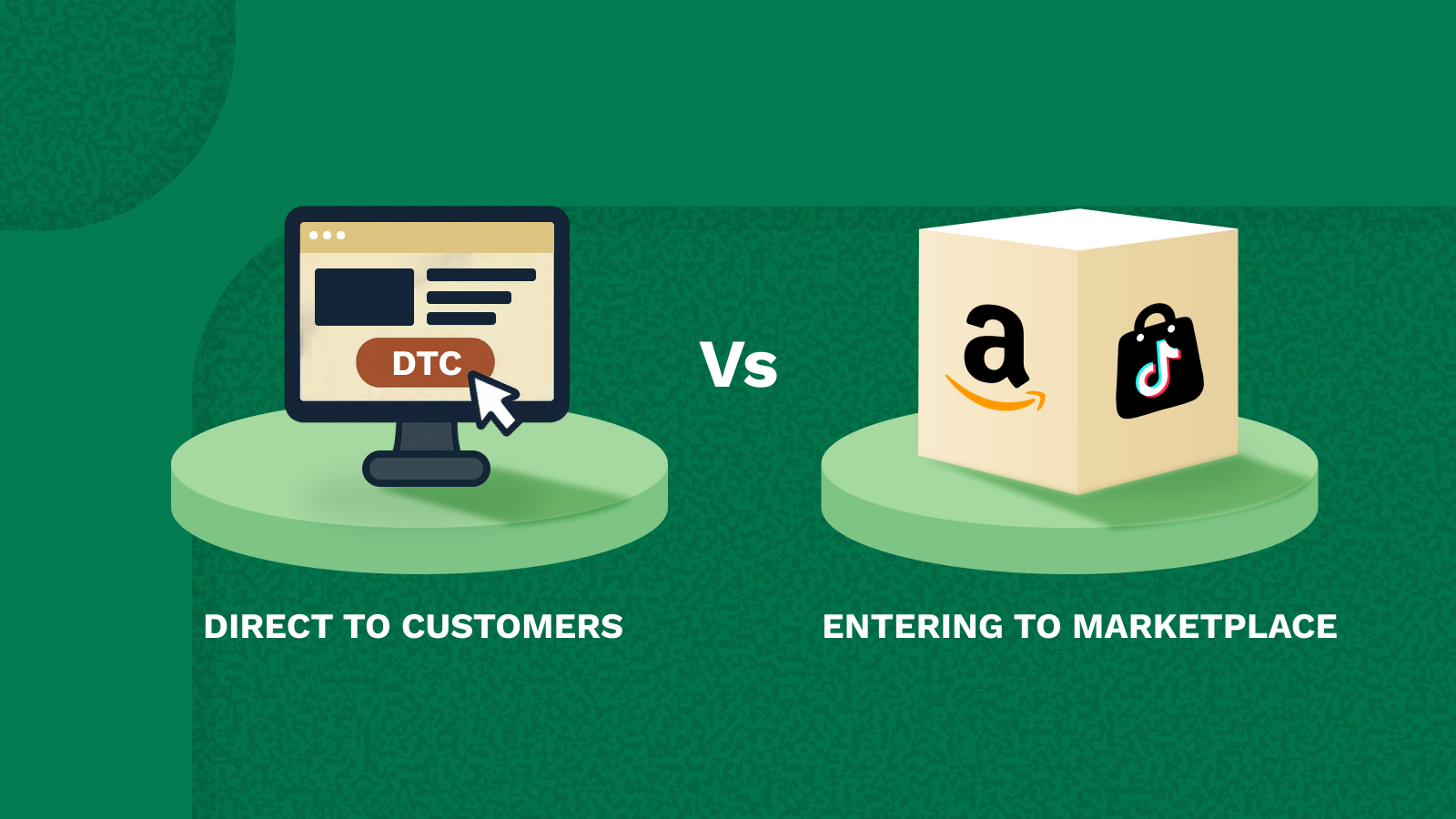

International ecommerce is growing, but choosing the correct expansion model has become a critical strategy point for scaling brands. Operators face a clear trade-off between speed and control:
There’s no universal “best” model. Top brands choose based on market maturity, category economics, and how well they can execute operationally. With this handy guide and framework, you’ll know when to lead with Marketplace-First, when to build DTC-First, and when a Hybrid Model makes sense. It’s built for operators who need to combine short-term traction with long-term margin and control.
A marketplace-first strategy prioritizes speed of entry and built-in discovery. Platforms like Amazon, TikTok Shop, Shopee, and Noon already have active traffic, payment infrastructure, and last-mile networks.
This model suits brands entering a new geography where:
The trade-off: limited control over brand experience, data, and pricing flexibility. You’re renting reach — not owning it.
A DTC-first strategy prioritizes brand control, margin optimization, and customer ownership. It works best when:
DTC gives full visibility into conversion, retention, and LTV. The challenge is higher upfront investment: setting up compliant checkout, tax handling, and shipping networks — all before demand is proven.
The hybrid model combines marketplace exposure with DTC infrastructure. It’s the most flexible route for brands scaling globally because it blends speed and control:
A hybrid approach suits mid- to large-size ecommerce operators who can manage parallel systems and data flows.
Example: Launch on Amazon UK to test interest, then drive returning customers to your DTC site with region-specific pricing and email flows.
When deciding between marketplace-first, DTC-first, or hybrid entry, evaluate these factors:
Commoditized or lower-ticket items perform better on marketplaces where discovery drives sales. Premium or niche products see stronger results in DTC environments that allow storytelling and margin control.
Established names can lead DTC-first and invest in owned channels. New or regionally unknown brands benefit from the built-in visibility and trust of marketplaces.
If you lack local warehousing or cross-border compliance capabilities, start marketplace-first. Mature ops teams can run localized DTC or hybrid setups more profitably.
Complex markets (e.g., EU, APAC) favor models with built-in compliance infrastructure. Marketplaces or partners that manage IOR, VAT, and duties reduce friction.
Customer acquisition costs are lower on marketplaces with built-in traffic. DTC expansion demands higher upfront ad spend but better long-term retention economics.
In regions like APAC, marketplaces dominate due to payment and authenticity assurance. In UK/EU or North America, customers are more comfortable transacting directly in brand-owned stores.
The best model aligns your brand equity, operational maturity, and market complexity to create scalable, profitable entry points.
In Europe, Amazon is the leading marketplace in major markets like the UK, Germany, France, Italy, and Spain. It’s also a common “first step” for US brands because the UK shares language, has mature ecommerce behavior, and sits on top of a dense FBA network that acts as a gateway into the wider EU.
What this means for strategy:
You’re choosing between using Amazon to validate and accelerate, or leading with DTC where brand equity already exists.
APAC – especially Southeast Asia – is heavily marketplace-driven. Recent regional analysis shows Shopee, TikTok Shop, and Lazada control over 80% of platform GMV in Southeast Asia.
That concentration makes marketplaces the default discovery and transaction layer for many categories.
So in practice:
In MENA, ecommerce is still ramping but marketplaces already shape the landscape. In the UAE and Saudi Arabia, Amazon.ae and Noon are the dominant marketplaces, trading the top two positions between them depending on the country.
Ecommerce penetration is growing off a relatively low base, but regions like the UAE and KSA are now among the most advanced digital markets in MENA.
Implications for channel choice:
If you’re entering the US or Canada from abroad, the landscape is very concentrated. Multiple sources put Amazon at 38–40% of US ecommerce market share, far ahead of other retailers.
At the same time, Shopify-powered merchants collectively account for a meaningful share of US ecommerce sales – showing how strong the DTC ecosystem is, not just marketplaces.
So a pragmatic read looks like this:

Total Score Guide:
How to use it:
Pro tip: Use this Google Sheet version of the decision framework for easy application. (remember to Make a Copy so you can edit)
Marketplace-First: Obvi
Obvi, a U.S. wellness brand, used OpenBorder to expand into the U.K. and E.U. through marketplace infrastructure first — enabling duty-paid delivery, local returns, and rapid customer acquisition without setting up local entities.
Impact:
DTC-First: DRMTLGY
DRMTLGY, a leading U.S. skincare company, expanded globally using OpenBorder’s localized DTC checkout and fulfillment network. Rather than relying on third-party marketplaces, the brand maintained full control over its customer journey — pricing, duties, returns, and customer data.
Impact:
Think of global expansion more like a series of calculated tests. The smartest operators choose the model that fits their brand equity, operational strength, and market maturity, then evolve toward hybrid scale.
If your team is evaluating the next region or channel to unlock growth, talk to us about designing a global channel strategy that balances speed, control, and profitability.